
From Vancouver House to Vienna House: Lessons for the Future of Adaptable Housing

Why Canada Needs a Construction KPI Framework for Housing Investments
March 2, 2026
Scaling Made-in-B.C. Housing Innovations
June 15, 2026Key Lessons from Vancouver House
At Scius, our work is driven by the transformation of research into practical, scalable construction solutions. Contributing to the research for BC Housing’s Vienna House project in East Vancouver, we are thrilled to celebrate the completion of its newly opened sister project: Vancouver House in Vienna, Austria.
Tenants began moving into the 107-unit development on January 13, 2026. Built on the "Viennese four-pillar model" (balancing social sustainability, architecture, economy, and ecology), Vancouver House offers a masterclass in designing for long-term adaptability for longer use of the existing building and the use prefabrication.
For a deep dive into the technical details of this project, refer to the complete report: “Builder Insight - Vancouver House In Vienna”
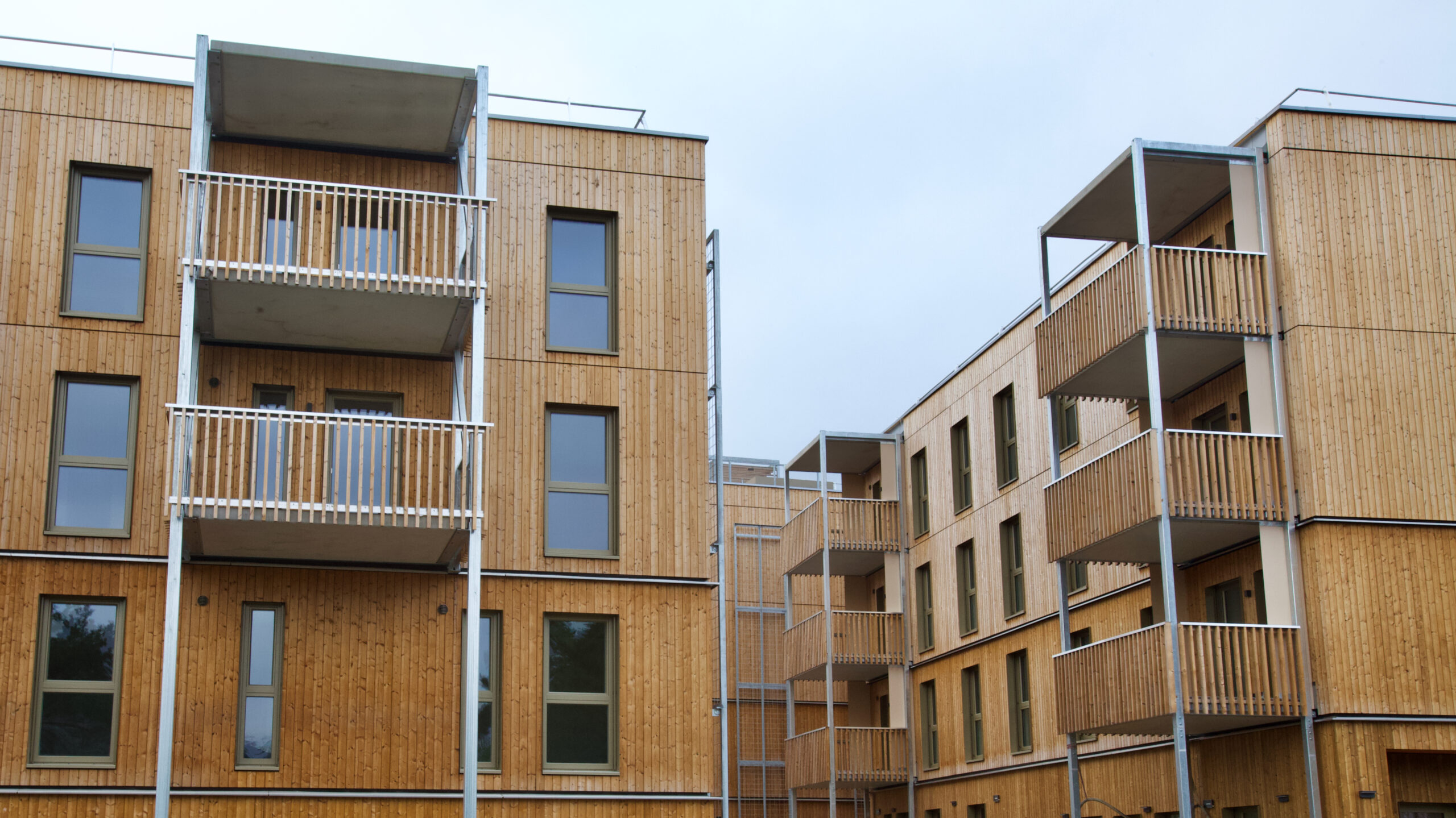
Vancouver House in Vienna, Austria
Embracing Typological Diversity
In our previous reports on The Circular Built Environment in Canada, we’ve highlighted the need for buildings that adapt to change over time. Vancouver House accomplishes this through its Typological Diversity. To ensure the building remains functional over its expected 200-year lifespan, interior non-load-bearing walls can be completely reconfigured without rerouting major utilities. By distributing service connections horizontally along a central core, regular apartments can be easily merged, split into smaller single-parent units, or even converted into open-plan office spaces.
Leveraging Prefabrication
When supply chain and labour disruptions hit the project in the early 2020s, the team used a strategic Value Engineering phase to optimize their Open Building System (OBSYS). The redesign replaced the original exterior Cross-Laminated Timber (CLT) walls with prefabricated light wood frame panels, supported by an added load axis of glulam columns and beams. This shift makes it a great example of how offsite manufacturing is vital for maintaining affordability under economic pressure.
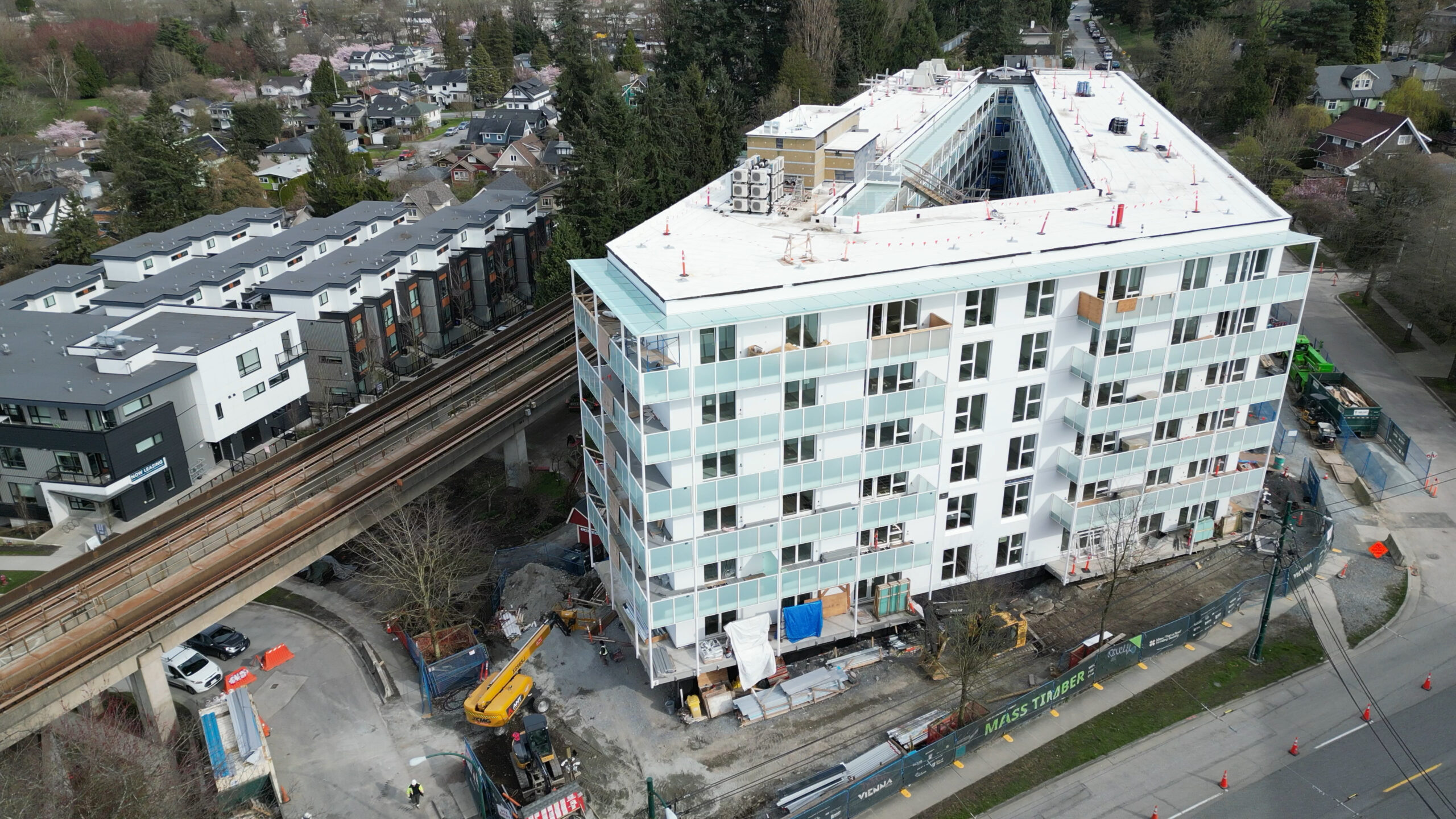
Image Credit: Bright Future Studios - Vienna House in Vancouver, B.C.
A Tale of Two Cities: Scaling the Lessons Learned
The cross-continental knowledge exchange between the Vancouver and Vienna teams yielded invaluable comparative data. To meet Vienna's strict fossil-fuel-free building regulations, Vancouver House uses a rooftop solar PV system combined with groundwater heat pumps and radiant flooring.
Cooperative planning that integrates architects, technical planners, and developers from day one is essential for complex urban timber projects. The project team in Austria left us with an excellent piece of wisdom: "You always build a house together!". Today, the foundational lessons from Vienna House are directly informing DASH (Digitally Accelerated Standardized Housing). Alongside BC Housing and our industry partners, we continue to support standardization, kits-of-parts, advanced BIM coordination, and industrialized prefabrication—and help scale them into a replicable model for Canada's construction industry.